
How to Clean Your Jewellery
- Kate Seow

- 3 days ago
- 6 min read
We all have those pieces that are in need of a bit of TLC - either a favourite piece that you wear all the time (and it shows) or maybe something that stays in your jewellery box most of the time, slowly tarnishing and becoming increasingly unloved. There are a number of tools and chemicals at our disposal, but which is the best to use and can they harm your jewellery? Here, I run through my favourite ways to clean jewellery using a gold and garnet ring that I inherited from my gran (I keep my own creations spick and span, so I can't use them as examples!)
My first port of call would be simply to use a soft polishing cloth, ideally one that's been impregnated with rouge, as this is the quickest and most cost effective way to bring that sparkle back. It's also safe for almost all types of jewellery, including the more delicate gemstones such as pearl and amber, although it can take patina off, so be careful with pieces that are intentionally patina'd. For favourite pieces, a regular (and gentle) wipe with a polishing cloth may be all that it needs. This is also the ideal opportunity to inspect your jewellery for wear and tear. This ring has worn claws, including two that are missing, and a thin ring band at the back, all of which would need repairing by a reputable jeweller. If you notice anything such as worn claws, thinning of ring bands or fastenings, or wobbly stones, take your jewellery to a jeweller and they will advise on the best way forward.


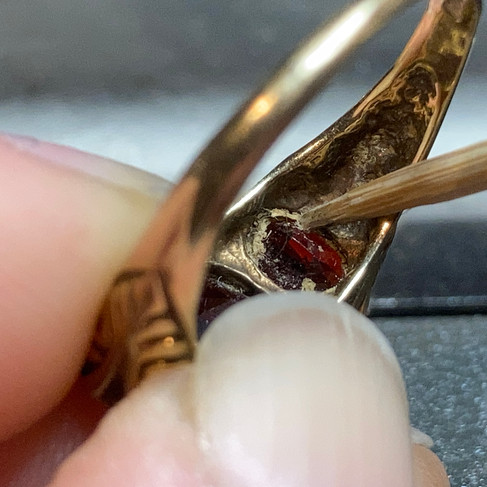
If the polishing cloth doesn't quite cut it, my next step would be to give the jewellery a gentle wash. I use warm water, washing up liquid and a soft brush such as a baby's toothbrush or the one I'm using here, which came with some jewellery cleaning solution. Like the polishing cloth, this method is safe for almost all jewellery, including pearls and amber. I'm cleaning this ring over a small bowl rather than the sink just in case some stones come loose. If any small stones do come loose, they often stick to fingers, the piece of jewellery or any tools you are using, so look out! I also use a wooden cocktail stick to remove a build up of dirt and grime from small crevices and behind stones (no judgement, it happens to us all!) Don't use a metal pin or similar as you could scratch your jewellery. Pat dry with some tissue such as kitchen towel, then use a polishing cloth to bring up a shine.


Hopefully, a gentle wash has done the trick, but if not, there are a few more options. For heavily tarnished silver pieces or patina'd gold, you can use either silver cleaning foam or liquid silver/jewellery dip. I particularly like Town Talk, which offers a number of different jewellery cleaning products, from silver dip to pearl cleaning spray, although other highly respected brands include Hagerty and Goddards. These methods use chemicals to remove the tarnish and are very effective and don't damage the metal. However, they do come with hazards, so I strongly recommend wearing eye protection and gloves, as well as working in a well-ventilated area when handling these chemicals. Once clean, you can rinse your jewellery thoroughly under the cold tap - whilst these chemicals shouldn't be released in large quantities into household drainage systems, the very small quantities that you rinse off whilst cleaning your jewellery or silverware will be diluted down to near negligible concentrations and should be easily removed further down the line at water treatment plants. One more word of caution: some silver dips shouldn't be used on gemstones, particularly delicate ones such as pearls, amber and opal, nor should they be used on non-precious metals, including plated items (such as stainless steel that has been gold-plated). Always read the instructions for your specific cleaning product to know which ones are suitable and which aren't. If in doubt, don't use it and ask a jeweller for advice.

A quick note on the "eco-friendly" silver cleaning hack that has become popular on social media: some people (including Google AI) recommend using aluminium foil with sodium bicarbonate and salt to remove tarnish. Whilst it's effective, I don't recommend using this method as it may be damaging your silver on a microscopic level by causing surface level pitting, which may cause it to tarnish faster in future, and over time wear down and weaken the piece including solder joins. As a chemist, I'm currently searching the primary evidence to back up this claim, and until I've found a definitive answer, I personally would hold off using this method.
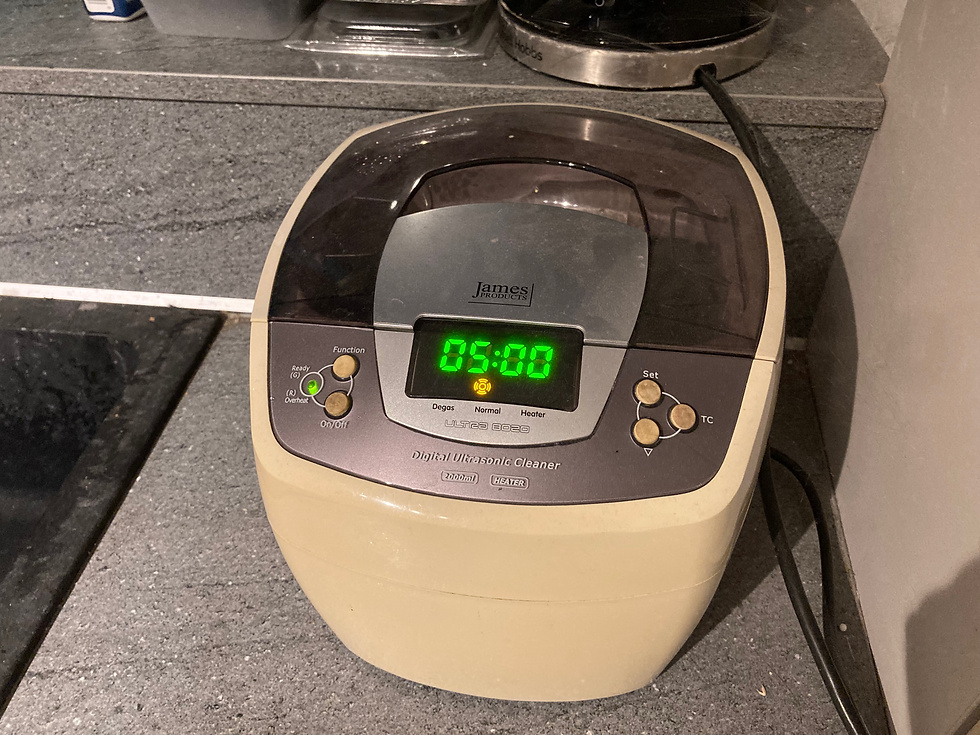
One last option available to you is using an ultrasonic cleaner. This is potentially risky for certain gemstones, and it won't remove tarnish or patina, but it will get rid of any dirt that's got properly stuck and won't come off, even with a wooden cocktail stick. There are a number of low cost ultrasonic cleaners available for domestic use - unfortunately, the one I use is no longer available, but there are alternatives such as the Lakeland Ultrasonic Jewellery Cleaner. While they won't be as powerful as those used by jewellers in their workshops, they're still going to get into the crevices that you just can't reach. There are jewellery-specific ultrasonic cleaning solutions available, but a bit of washing-up liquid in the water will also do the job. Again, a word of warning: do not put emeralds in an ultrasonic cleaner as they are often treated with oil to improve their appearance. A trip in the ultrasonic will remove this oil, causing the emerald to appear cracked. Other stones that should also avoid the ultrasonic cleaner include pearls, coral, amber, ivory, opal, turquoise, lapis lazuli, malachite and fluorite. Also, small stones may come loose from their settings, so be wary of putting pavé-set (or similar) pieces in. If in doubt, ask a jeweller for their advice.
A few last notes on keeping your jewellery clean: prevention is better than cure. One of the best ways to keep your jewellery in tip top condition is to store it carefully (you can read my previous journal entry on how to best store your jewellery here). Another great way to prevent build up of dirt, particularly behind stones, is to take your jewellery off when putting hand cream on and letting it absorb completely before putting your jewellery back on - this is particularly good for diamond jewellery as diamonds attract grease and oils. When cleaning your jewellery, never use harsh chemicals such as bleach or ammonia as these will damage and discolour your jewellery (also remove your jewellery if you are using them for other cleaning purposes). If you have tried cleaning your jewellery, but it's still not as shiny as you'd hoped, take it to a reputable jeweller as it may require more specialised techniques and equipment than those available to you at home - it may even need a re-polish. Whilst this will bring back much of the former sparkle and shine, deep scratches and dents may still remain.
I hope you have found this helpful and you feel a little more confident in cleaning your jewellery at home. If you are in any doubt about the suitability of a cleaning method on your piece of jewellery, get in touch with a reputable jeweller first. I have suggested some products in this article that you might find helpful. I'm not affiliated with these companies/brands in any way and do not earn anything by suggesting them - they are simply products that I personally use and like (or are from another trusted brand, where the exact product is no longer available).
If you enjoyed this and would like more content like this delivered straight to your inbox, you can join my VIP Club here - benefits include exclusive offers, early bird notifications and (of course) never missing another post again!
Until next time,
Kate xxx


Comments